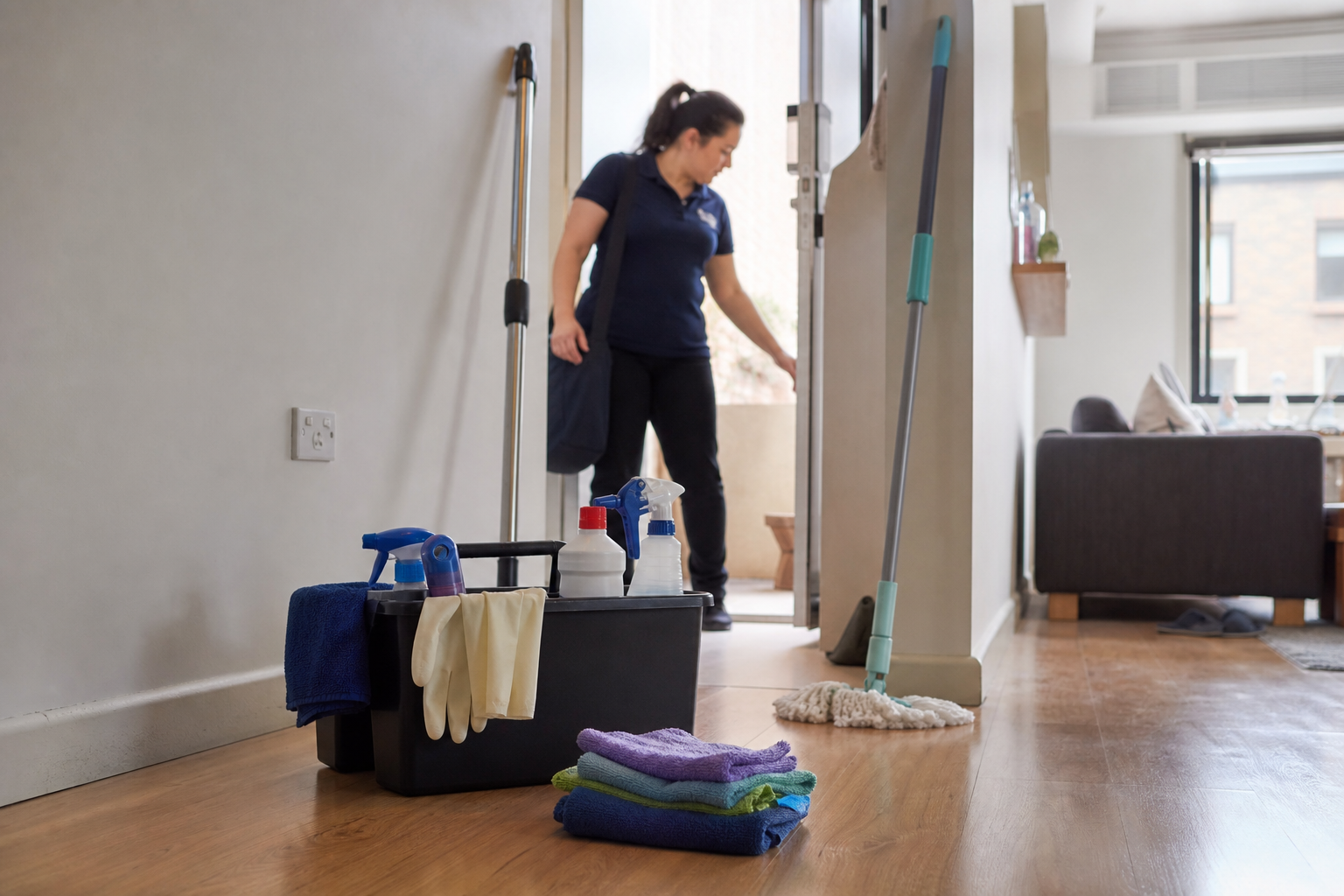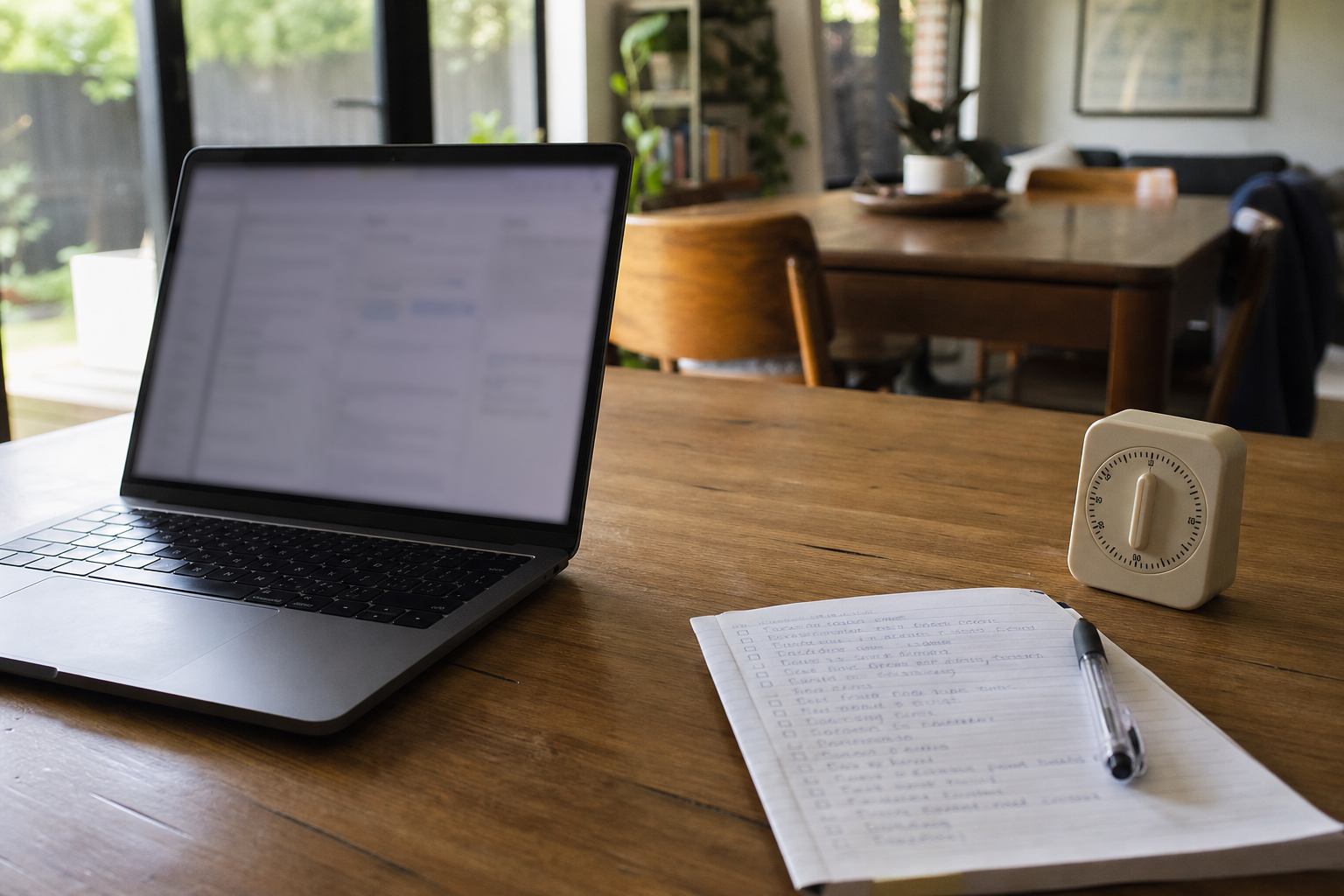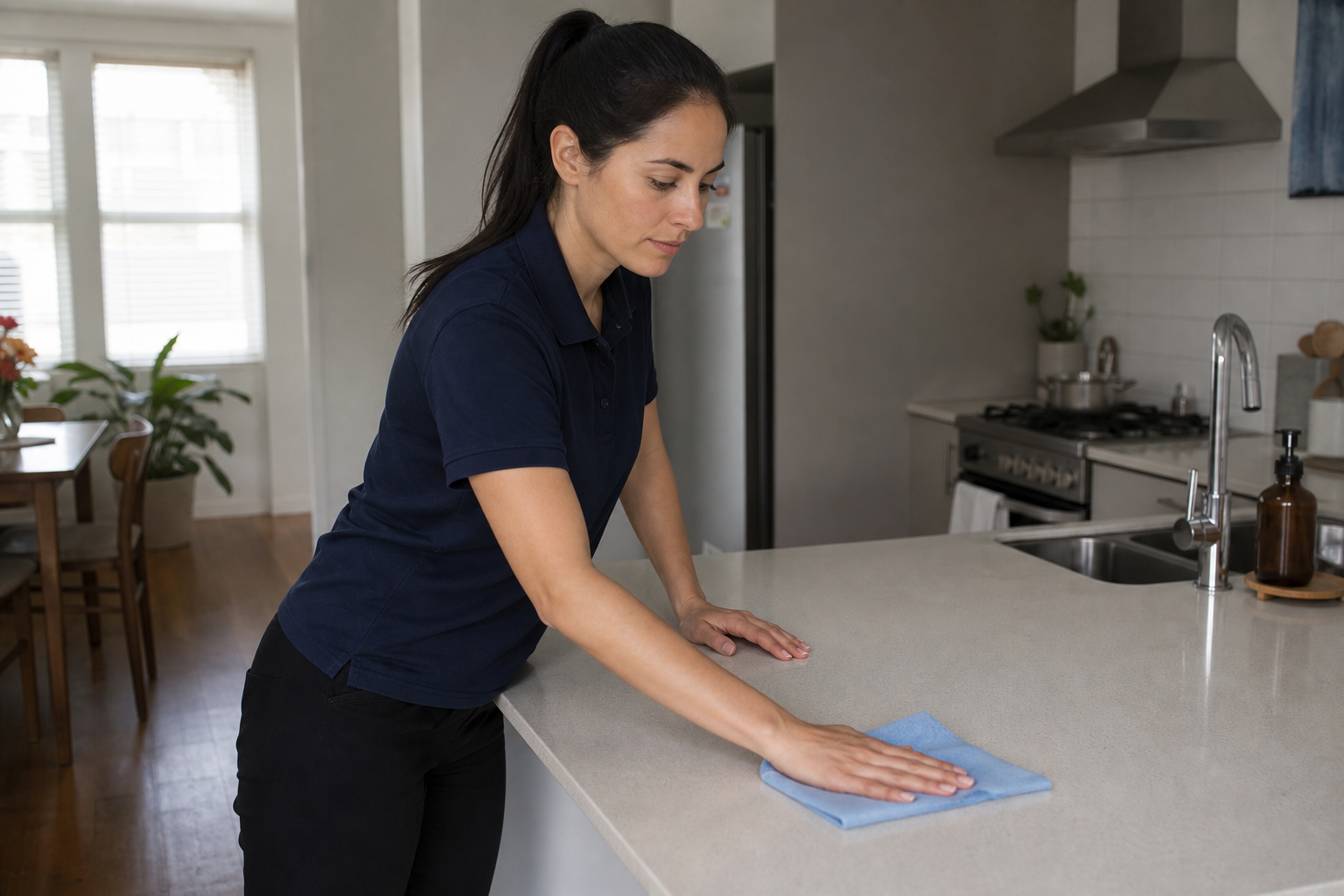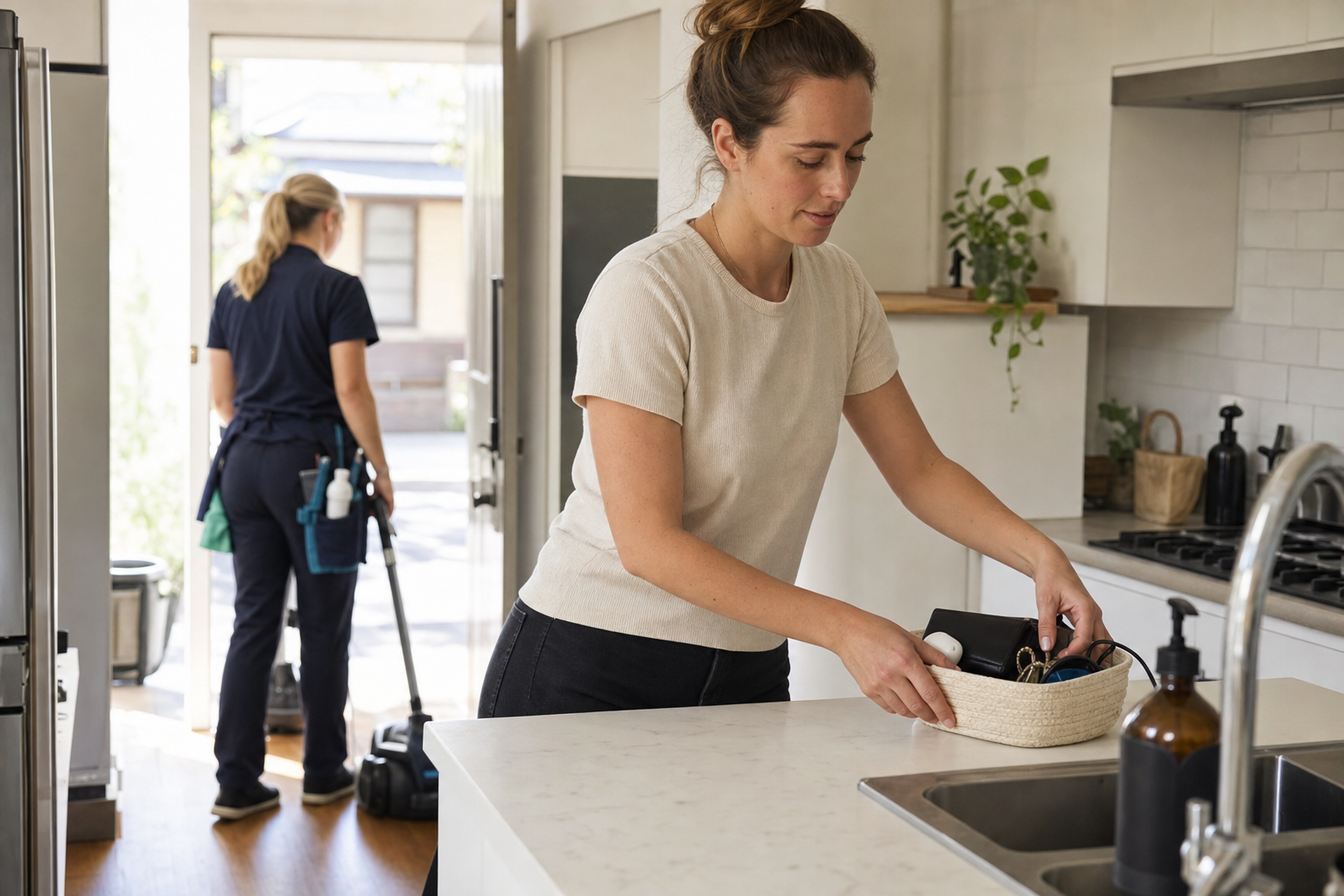
You do not need to clean the house before the cleaner arrives. A small amount of preparation simply protects your belongings and helps the booked time go toward the surfaces and rooms you want professionally cleaned.
Do you need to clean before the cleaner arrives?
No. You are booking a cleaner to clean. The useful preparation is removing uncertainty and improving access, not wiping every surface before the team arrives.
Loose belongings, dishes, laundry and paperwork can block the areas you want attended. If the cleaner must decide where personal items belong, useful service time may shift from cleaning to moving and replacing objects. For a checklist-based Standard House Clean, clear access helps the published scope fit the home as intended. For Hourly Cleaning, every minute spent sorting belongings uses the booked team time.
Preparation should be proportionate. If disability, health, caring duties or an overwhelming household are the reason you need help, explain that when booking. The team can then assess whether tidying, cleaning or a prioritised hourly service is the correct request.
Use this 15-minute preparation checklist
- Put away private papers and valuables
- Clear loose items from key surfaces
- Move dishes and food from the sink
- Place laundry and toys in one location
- Secure pets and explain access
- Identify delicate or damaged surfaces
- Send an ordered priority list if hourly
- Confirm keys, parking and contact details
Begin with the kitchen bench, bathroom vanity and main walking routes. These areas often unlock the greatest amount of useful cleaning without requiring a full-house tidy.
Put away valuables, medication and private documents
Store cash, jewellery, medication, passports, keys, mail and confidential work material before the visit. This protects privacy and avoids uncertainty if an item must be moved to clean beneath it.
Do not leave fragile collections or sentimental items on surfaces that need dusting. If an object should never be touched or moved, make that instruction explicit and, where practical, place it in a closed room or labelled area.
Photograph existing damage on a delicate or valuable surface and disclose it before work begins. A cleaner can follow known care instructions but should not have to guess the material or its condition.
Clear clutter from the surfaces that matter most
Tidying and cleaning are different tasks. Tidying means deciding where belongings go; cleaning means removing dust, residue and debris from accessible surfaces. You do not need a perfectly organised home, but a cleaner cannot effectively wipe a bench hidden under groceries, paperwork and appliances.
Use baskets if you are short on time. Place loose items from each room into a separate container and decide where they belong later. Avoid moving everything onto the floor because that can block vacuuming and mopping.
Focus on:
- kitchen benches and the sink;
- bathroom vanity, bath and shower edges;
- bedside tables and accessible bedroom surfaces;
- living-room tables and visible shelves;
- floors, stairs and the routes between rooms.
Decide what result you are booking
Choose the service by the condition of the home, not by the name that sounds most appealing. A Standard Clean suits an occupied home with ordinary recent use. A Deep Clean suits widespread buildup and neglected detail. Hourly Cleaning suits an ordered list where controlling time matters more than completing a fixed whole-home checklist.
If you are unsure, compare Standard versus Deep Cleaning before confirming. Sending honest current photographs is more useful than selecting the lowest scope and asking the cleaner to fit months of buildup into routine maintenance.
Inside ovens, fridges, empty cabinets, windows, balconies and targeted wall work may be extras depending on the service. Review what is included in a house clean so the booking matches your priorities.
Write priorities differently for hourly and flat-rate cleaning
For a flat-rate service, the published checklist defines the core result. Use notes to disclose condition, access and selected extras rather than replacing the service with an unrelated task list.
For hourly cleaning, provide a strict order. A useful list might read:
- main bathroom;
- kitchen benches, sink and cooktop;
- vacuum and mop living areas;
- second bathroom if time remains;
- bedroom dusting last.
Avoid marking every task urgent. If all priorities are equal, the cleaner cannot make a sensible decision when the booked time is nearly finished. Use the guide to estimating cleaning hours before creating a whole-home list.
Tell the cleaner about pets
Confirm which pets live at the property and how they will be managed. Even friendly animals can be frightened by vacuums, open doors or unfamiliar people.
Secure pets in a safe room, enclosure or off-site location agreed in advance. Do not place an animal in a room that must be cleaned unless the team knows when and how it can be moved safely. Mention shedding, recent accidents, litter areas and any door that must remain closed.
A cleaner should not be responsible for walking, feeding or supervising a pet unless a separate arrangement explicitly covers that work.
Provide reliable entry and parking
Send current access instructions through the booking process. Test lockboxes, fobs and codes before the appointment. If a concierge controls access, confirm authorisation and opening hours. For apartments, explain legal parking, lift bookings and loading restrictions.
If nobody will be home, provide one reachable contact. Delayed access reduces the available window and can affect what the team completes.
Maid At Home operates Monday to Saturday from 9am to 5pm. Make sure building rules and key collection allow the cleaner to enter and finish within the agreed booking.
Identify surfaces that need special care
Tell the team about natural stone, unsealed timber, damaged coatings, specialty appliances and any product restriction. If a manufacturer requires a particular method, provide the instructions before the visit.
Do not mix cleaning chemicals or leave unlabelled products for the cleaner. Products should remain in their original containers with readable safety information. Domestic cleaning does not include hazardous waste, pest treatment, mould remediation or material restoration.
What should you leave out for the cleaner?
Follow the provider’s booking instructions. Confirm whether the team supplies products and equipment or expects safe working items at the property. Provide access to running water, electricity and suitable lighting.
For bed-linen changes, leave the correct clean set clearly identified on the bed. For selected inside-fridge or cabinet work, empty the relevant area first unless the service explicitly says otherwise.
Keep unrealistic extras out of casual notes. If the request changes the scope, discuss it before arrival so the provider can allow enough time and quote it correctly.
Should you stay home during the clean?
Either arrangement can work. If you stay, keep the rooms being cleaned available and avoid walking across wet floors. Working from home is easier when you agree on the room order at the beginning.
If you leave, make sure access, alarm instructions, pets and the closing procedure are clear. Do not send sensitive security information through a public review or unsecured note.
After the cleaning visit
Review the result against the service you booked, not against tasks that were never included. If an agreed item appears to have been missed, contact the provider promptly with the room, task and a useful photograph.
Notice whether the chosen service and frequency were realistic. If ordinary buildup returns within a few days, compare weekly and fortnightly cleaning. If the first visit revealed deeper accumulated work, the next booking may need a different scope.
When the home and priorities are ready, use the current price calculator or book your Melbourne house clean.