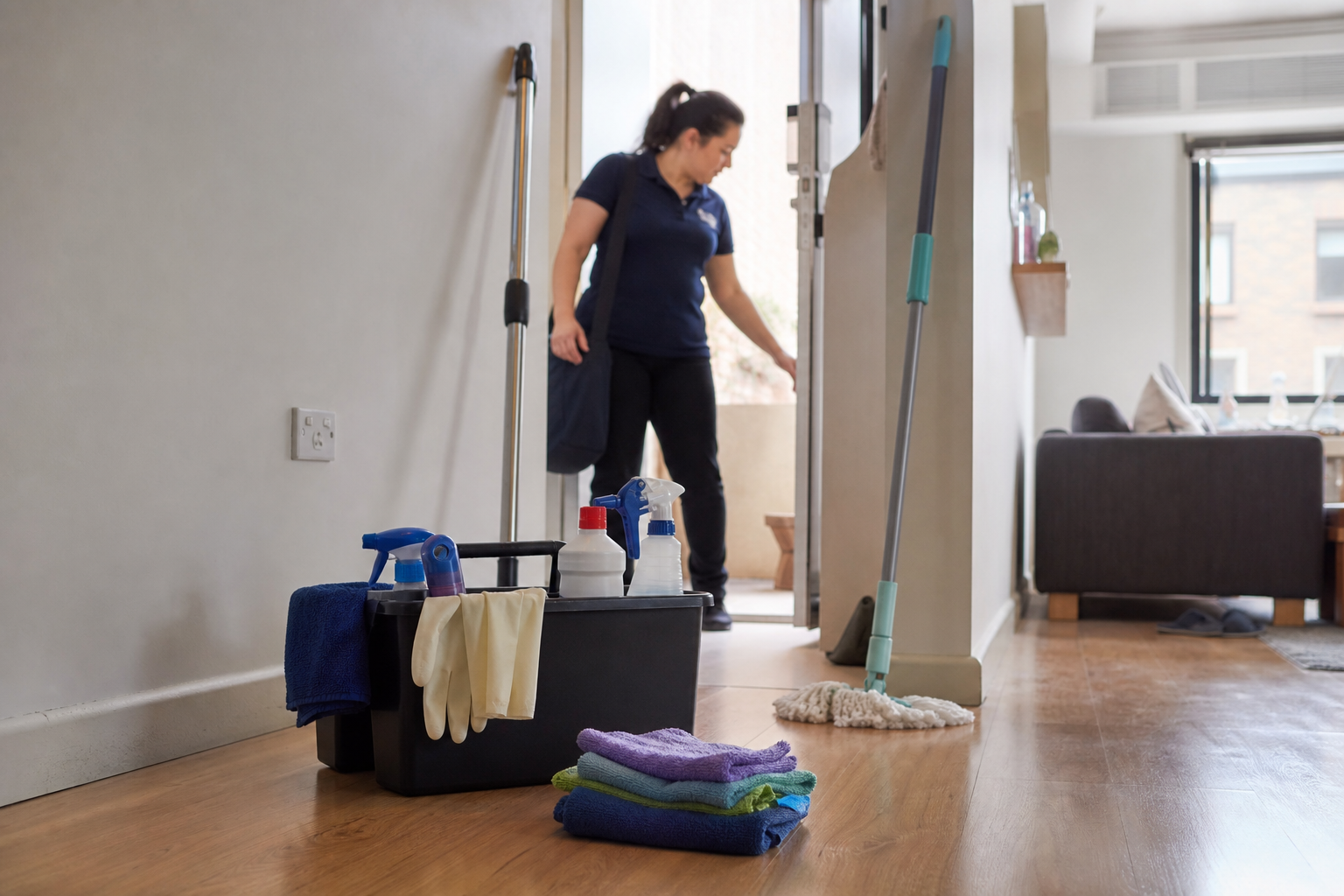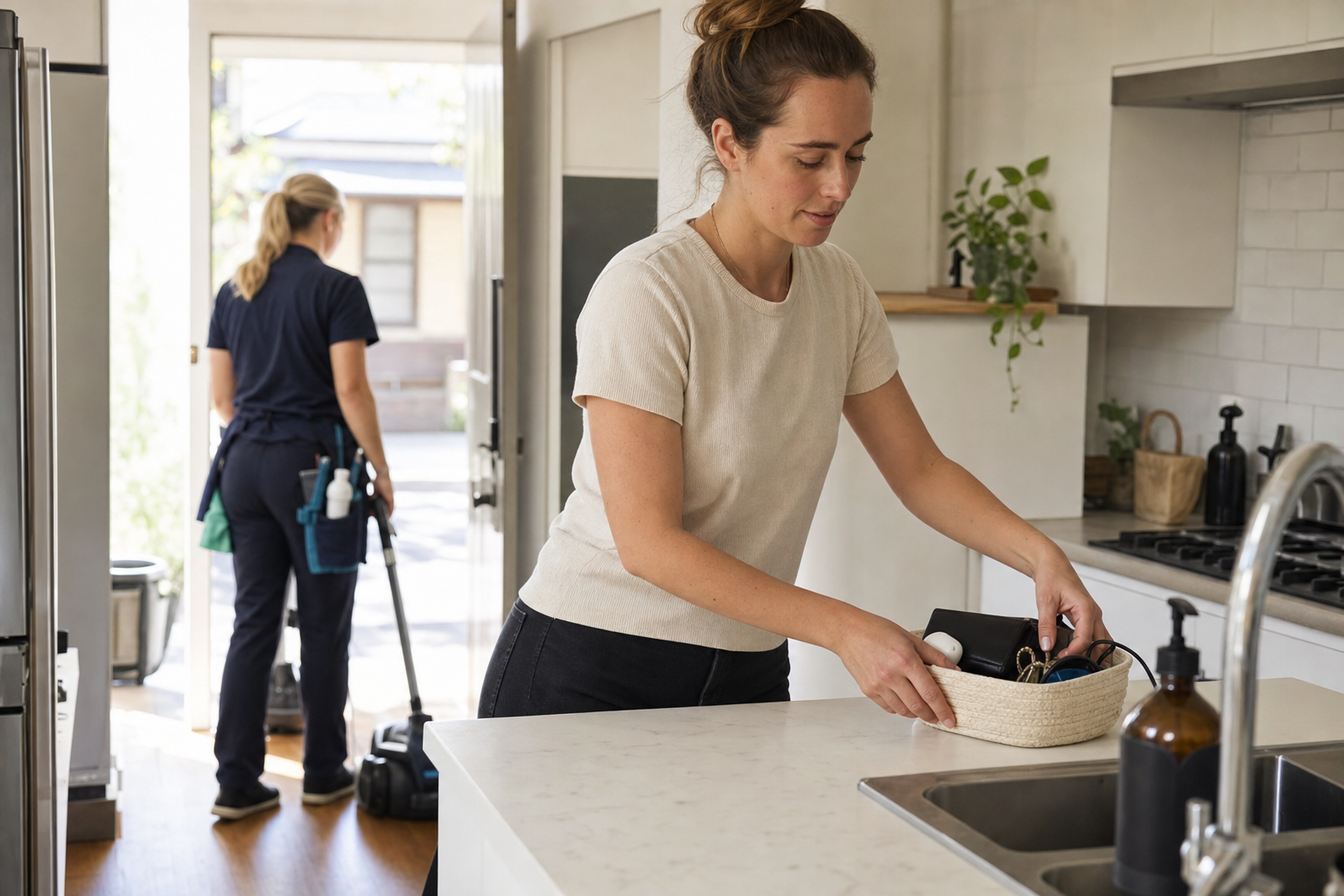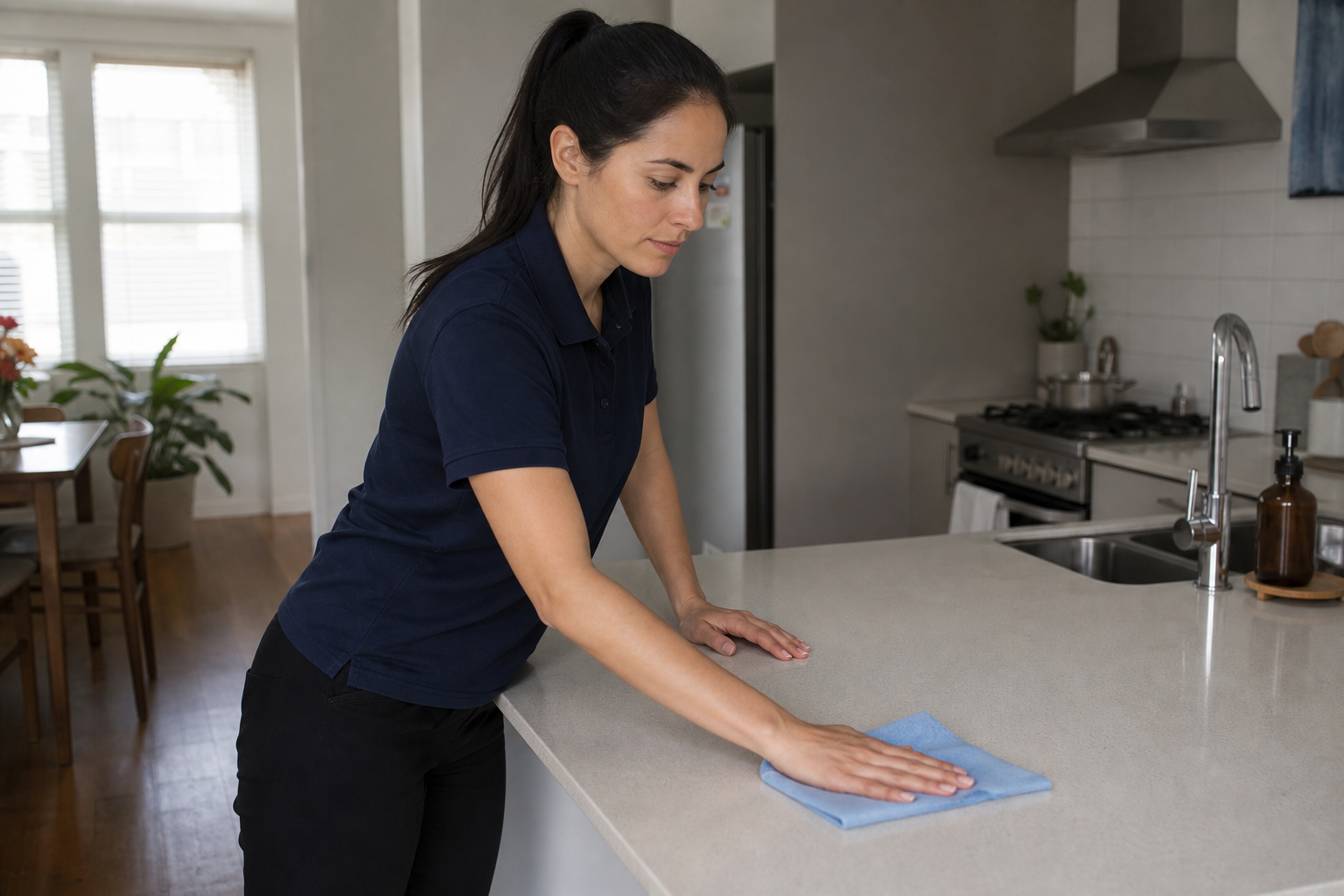
Standard and Deep Cleaning cover many of the same rooms, but they are designed for different starting conditions. The right choice depends on buildup and detail—not how urgently you want the booking.
The difference in one sentence
A Standard House Clean maintains a home that already has a workable baseline. Standard and Deep can each be booked once or placed on a recurring schedule; the service level and the frequency are separate decisions. A Deep Clean allocates more attention to widespread buildup, edges and detailed areas that routine maintenance cannot realistically address in the same scope.
Deep cleaning is not simply a standard clean performed more enthusiastically. It is a different service decision based on the home’s present condition. Booking the lighter option for a home with months of residue can create an impossible checklist; booking deep cleaning for an already maintained apartment may spend money on detail you do not currently need.
Side-by-side comparison
| Question | Standard House Cleaning | Deep Cleaning |
|---|---|---|
| Best for | Maintained, occupied homes | First visits, seasonal resets and visible buildup |
| Main goal | Restore the everyday baseline | Create a stronger baseline |
| Detail level | Routine accessible surfaces | More attention to edges, skirting and accumulated residue |
| Melbourne price from | $155 for one bedroom | $215 for one bedroom |
| Can recur? | Yes | Yes, although many customers deep clean first then maintain |
| Oven interior | Optional extra | Optional extra |
| Carpet steam cleaning | Separate service | Separate service |
Both services cover kitchens, bathrooms, bedrooms, living areas and accessible floors according to their published scope. The difference is how much buildup must be addressed and how detailed the work needs to be.
Choose Standard Cleaning when the home is maintained
Standard House Cleaning in Melbourne is usually the right fit when occupants already wipe spills, manage clutter and prevent thick residue from building up. You may still see ordinary dust, bathroom marks and kitchen use—the home does not need to be spotless before the cleaner arrives.
Signs that standard cleaning is realistic include:
- kitchen grease is light and responds to routine wiping;
- showers and basins have normal recent use rather than layered scale;
- floors need vacuuming or mopping, not restoration;
- skirting and edges do not have widespread neglected dust;
- surfaces are accessible without moving heavy belongings;
- you want weekly, fortnightly or periodic maintenance.
A standard clean can be booked once, but its strongest use is consistency. The service prevents ordinary household use from turning into a much larger reset.
Choose Deep Cleaning when detail has accumulated
Deep House Cleaning is more suitable when several rooms show visible buildup or when the home has gone a long time without a thorough service. Typical triggers include a first professional clean, a seasonal reset, preparation for guests or the need to establish a baseline before recurring visits.
Look for evidence across the whole home: greasy kitchen detail, soap residue, dust around edges and fittings, marked skirting, neglected ledges or multiple high-use rooms needing more than a routine pass. One isolated task—such as the inside oven—does not automatically require a Deep Clean because it may be added separately.
Deep Cleaning is not mould remediation, rubbish removal, pest treatment or restoration of damaged materials. Permanent stains, worn coatings and unsafe areas remain outside normal cleaning.
What about time and price?
Maid At Home’s July 2026 flat rates begin at $155 for a one-bedroom Standard Clean and $215 for a one-bedroom Deep Clean. A three-bedroom home begins at $195 regular or $275 deep. Prices include GST before selected extras.
Condition still matters. If your layout has extra living rooms, several bathrooms or heavy buildup beyond the normal description, share photos and details before confirming. For a short, ordered list where time control matters more than whole-home completion, Hourly Cleaning may be the better model.
Use the cleaning price calculator to compare home sizes, frequency and extras.
A practical decision test
Walk through the kitchen, main bathroom and floors in daylight. Ask whether the visible marks are from ordinary recent use or from repeated layers that have not been addressed. Then check edges, skirting and fittings in two additional rooms.
If the issue is light and recent, choose Standard Cleaning. If buildup appears across several rooms or the detail has been neglected, choose Deep Cleaning. If only one room matters and you accept a time limit, consider Hourly Cleaning.
When uncertain, send current photos rather than selecting a lower scope and hoping everything will fit. Honest condition information helps the team recommend enough time and reduces surprises on the day.
What should you prepare?
For either service, clear loose clutter from the surfaces and floors you want cleaned, secure pets and provide reliable entry and parking information. Identify delicate finishes and special product requirements before arrival. If the cleaner must wait for keys, move belongings or discover unknown rooms, less useful time remains for cleaning.
Before either service, use the house-cleaning preparation checklist to clear access, protect valuables and explain delicate finishes. Book the Standard Clean when your home needs upkeep, or the Deep Clean when it needs a more detailed reset.