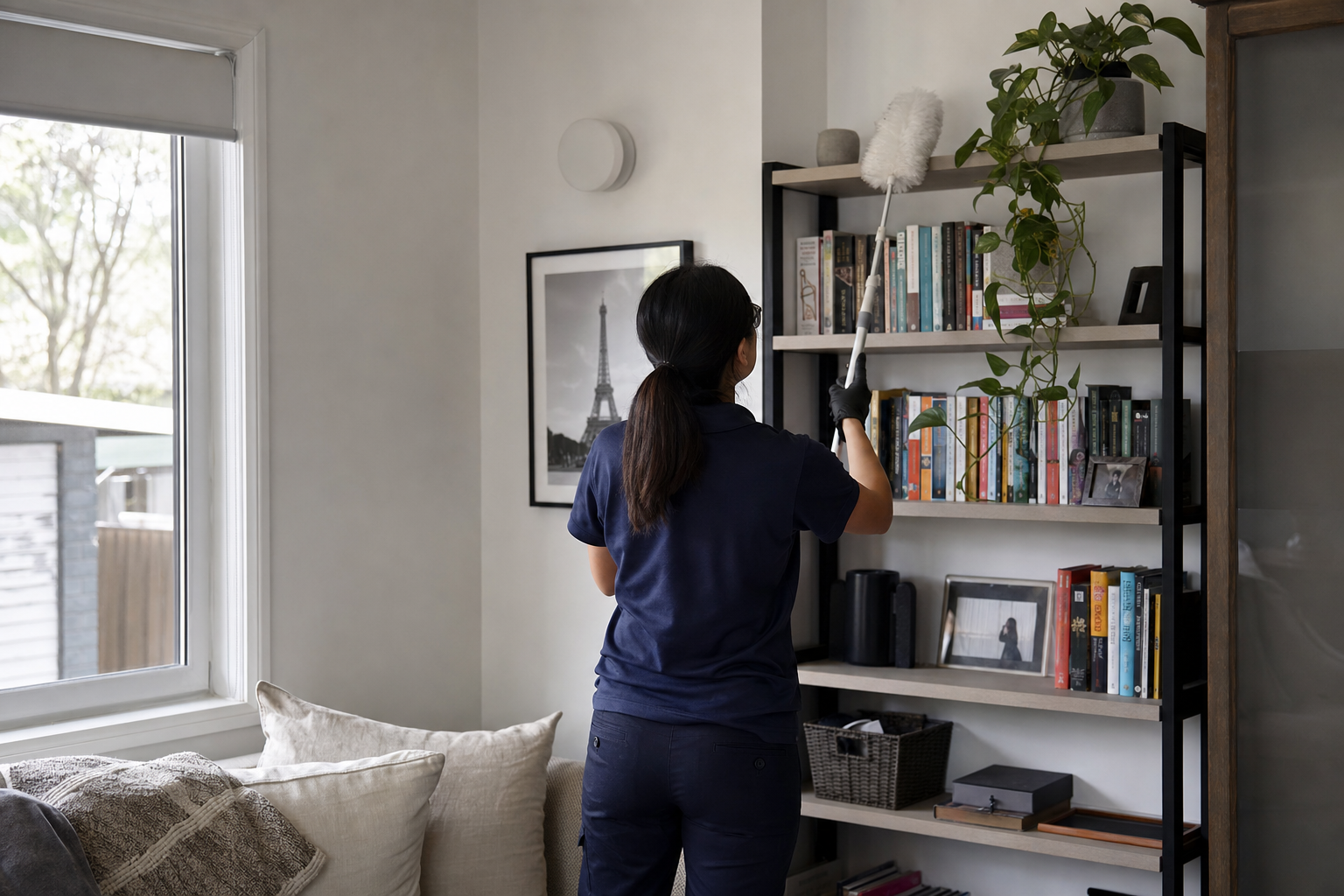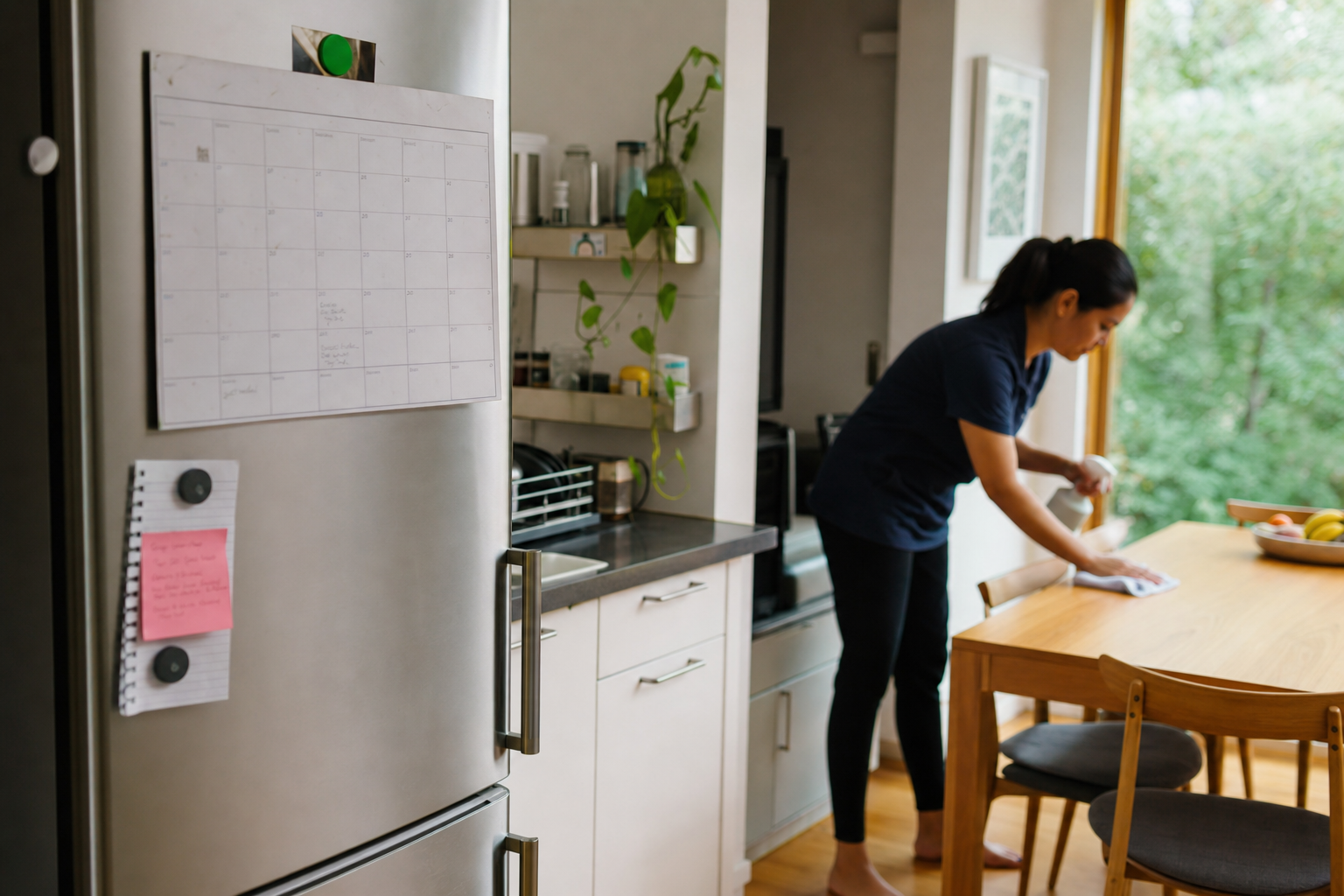
A useful cleaning routine should support the household, not become another standard that makes everyone feel behind. The goal is to spread essential work across the week so no single day carries all of it.
What makes a cleaning routine realistic?
A realistic routine acknowledges that homes are lived in. Meals are cooked, laundry returns, pets shed and people have things they would rather do. A schedule that ignores this will usually collapse after a few demanding days.
Instead of beginning with a long list of everything that could be cleaned, start with three questions:
- Which areas affect the whole home when they become untidy?
- Which tasks become harder when delayed?
- Which jobs can wait without creating more work?
This gives the week a useful order. Essential tasks stay visible, while lower-priority work can move without making the entire routine feel unsuccessful.

A flexible seven-day cleaning routine
Use this as a starting point rather than a strict timetable. Move tasks to suit workdays, school schedules and the times when each room is naturally less busy.
| Day | Focus |
|---|---|
| Monday | Kitchen surfaces, sink and anything after the weekend. |
| Tuesday | Main bathroom, toilet, basin, mirror and shower surfaces. |
| Wednesday | Bedrooms, surfaces, bed linen and a quick floor reset. |
| Thursday | Living areas, accessible surfaces and visible clutter. |
| Friday | Vacuum main traffic areas and mop hard floors. |
| Saturday | Laundry, linen and one rotating detail task. |
| Sunday | A ten-minute whole-home reset — or a genuine day off. |
The rotating Saturday task might be internal windows, the fridge, a balcony or one cupboard. Choosing only one prevents the weekend from becoming a deep-clean list.
A home does not need every task completed at once. It needs the right tasks handled before they begin creating more work.
Maid At Home
The ten-minute daily reset
Daily maintenance is less about cleaning thoroughly and more about removing the obstacles that make tomorrow’s cleaning harder. Set a timer and stop when it ends.
- Put dishes into the dishwasher or wash the sink load
- Wipe fresh spills and food residue
- Return visible items to their usual rooms
- Clear the main kitchen benchtop
- Hang damp towels and bathmats properly
- Deal with one small load of laundry if needed
If ten minutes is not available, choose the kitchen sink and visible clutter in the main living space. Those two areas often have the strongest effect on how orderly the whole home feels.
Room-by-room priorities
Kitchen
Prioritise food-contact surfaces, the sink and anything that may stain or develop odour. Cabinet fronts, appliance interiors and detailed rack care can rotate less frequently.
Bathrooms
Ventilation and moisture matter as much as appearance. Keep shower surfaces, towels and bathmats able to dry. Clean the toilet, basin and mirror before moving to less visible details.
Bedrooms
Fresh linen, accessible floors and clear bedside surfaces usually create the greatest difference. Detailed dusting can be rotated between rooms rather than completed everywhere at once.
Living areas
Focus on the routes people walk and the surfaces everyone sees. A quick reset of cushions, visible clutter and the main floor area often does more than detailed work in an unused corner.

What to do when the week gets away from you
Do not try to catch up by combining every missed task into one exhausting session. Restart from the current day and use this order:
- Remove food residue, rubbish and anything damp.
- Restore the kitchen sink and one bathroom.
- Clear the main walking routes and vacuum visible debris.
- Choose one load of laundry that is genuinely needed.
- Leave optional detail work until the essential areas feel manageable.
A routine is still working if it helps you restart. Missing a day or an entire week does not mean the schedule has failed.
When professional cleaning makes sense
Professional help can take over the recurring baseline while the household handles small daily resets. It is particularly useful when weekends are repeatedly being spent catching up, mobility makes certain tasks difficult, or the home needs a more reliable rhythm than the week allows.
A Standard Clean is designed for routine maintenance of the main rooms and surfaces and can be booked once or regularly. Before the first visit, use the house cleaner preparation checklist to protect the booked cleaning time. For built-up detail work, a Deep Clean may be the better starting point before moving into regular care.
Weekly or fortnightly support generally suits busier households. Three-weekly or monthly cleaning can work well when the home is actively maintained between visits.
Whatever rhythm you choose, keep it flexible. A home-care routine is not a test of discipline; it is simply a way to protect time, reduce buildup and make the next reset easier than the last.